

Dental Implants in Minnetonka
Missing one or more teeth can affect your confidence, oral health, and quality of life. At Tonka Smiles, we provide long-lasting dental implant solutions that look, feel, and function like natural teeth. Whether you need to replace a single tooth or restore an entire smile, our experienced team creates personalized treatment plans designed to help you eat, speak, and smile with confidence again.
Dental Implant Directory
What Are Dental Implants?
Dental implants are considered the gold standard for replacing missing teeth because they restore both the visible tooth and its root. A dental implant consists of a small titanium post that is surgically placed into the jawbone, where it serves as a strong, permanent foundation for a custom dental crown, bridge, or implant-supported denture.
Unlike traditional bridges or removable dentures, dental implants integrate with your jawbone through a natural healing process called osseointegration. This creates exceptional stability while helping preserve bone density and preventing the facial changes that often occur after tooth loss.
With proper care, dental implants can provide a lifetime of comfortable, natural-looking function.
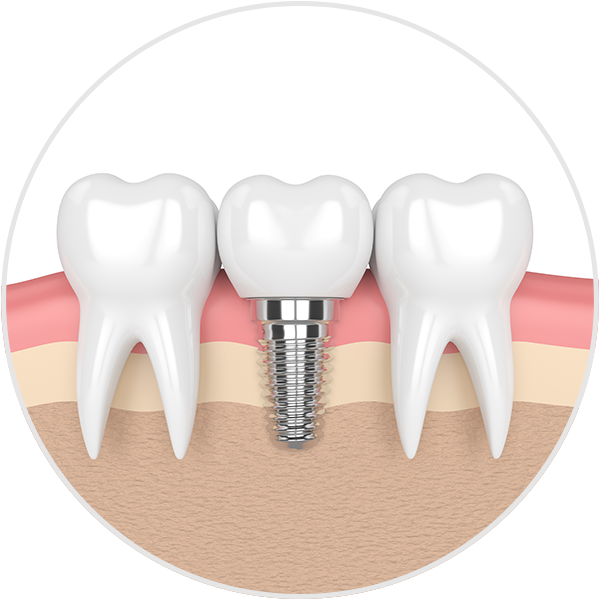
After the implant is placed, your jawbone naturally bonds with the titanium post, creating a stable foundation for your restoration. Once healing is complete, an abutment is attached to the implant, followed by your custom-made replacement tooth. Depending on your treatment plan, a temporary tooth may be placed immediately after surgery to maintain your smile during healing.
Benefits of Dental Implants
Dental implants are designed to restore both the appearance and function of your smile while supporting your long-term oral health. Unlike other tooth replacement options, implants help stimulate the jawbone, preventing bone loss and maintaining your natural facial structure.
Benefits include:
- Replace a single missing tooth without affecting neighboring teeth.
- Replace multiple missing teeth with implant-supported bridges.
- Support full-arch restorations and implant-retained dentures.
- Restore normal chewing and speaking ability.
- Help preserve jawbone density and facial contours.
- Provide a stable, secure fit without slipping.
- Look and feel like natural teeth.
- Offer a durable, long-term tooth replacement solution.
How Do Dental Implants Work?
Dental implants are surgically placed into the jawbone where they function as artificial tooth roots. Over several months, the implant fuses with the surrounding bone through osseointegration, creating a strong and stable foundation.
After healing, an abutment is attached to the implant, followed by a custom-made dental crown, bridge, or implant-supported denture. The finished restoration is carefully designed to match your surrounding teeth, providing a natural appearance and comfortable bite.
Am I a Candidate for Dental Implants?
Many adults with missing teeth are candidates for dental implants. During your consultation, we will evaluate your oral health, bone density, and overall medical history to determine the best treatment option for you.
You may benefit from dental implants if you:
- Are missing one or more teeth.
- Have a severely damaged or decayed tooth that cannot be restored.
- Wear removable dentures and want a more secure solution.
- Have difficulty chewing because of missing teeth.
- Want a permanent alternative to bridges or dentures.
If you have experienced bone loss, bone grafting may help prepare your jaw for successful implant placement.
The Dental Implant Process
Every dental implant treatment begins with a comprehensive consultation, digital imaging, and a personalized treatment plan.
- Consultation and Evaluation – We assess your oral health and determine the best treatment approach.
- Tooth Extraction (if necessary) – Damaged or non-restorable teeth are removed.
- Bone Grafting (when needed) – Bone is rebuilt to create adequate support for the implant.
- Implant Placement – The titanium implant is carefully placed into the jawbone.
- Healing Period – The implant integrates naturally with the surrounding bone.
- Abutment Placement – A connector is attached to the implant.
- Final Restoration – Your custom dental crown, bridge, or denture is securely attached.
Dental Implant Aftercare
Proper aftercare is essential for successful healing and long-term implant health.
- Eat soft foods during the first couple of weeks following surgery.
- Take medications exactly as prescribed.
- Practice excellent oral hygiene by brushing and flossing daily.
- Attend all recommended follow-up appointments.
- Continue routine dental cleanings to help keep your implant healthy for years to come.
Sedation Options for Dental Implant Surgery
We understand that many patients experience dental anxiety. Our team offers safe sedation options to help you remain comfortable and relaxed throughout your procedure.
- Nitrous Oxide (Laughing Gas)
- Oral Conscious Sedation (Valium or Halcion)
We’ll discuss your health history and comfort level during your consultation to recommend the safest sedation option for your treatment.
If you’re ready to restore your smile with dental implants, contact Tonka Smiles today to schedule your consultation. Our experienced team is committed to providing comfortable, personalized care using modern technology and proven techniques.
Dental Implant FAQs
How long do dental implants last?
With proper oral hygiene and routine dental visits, dental implants can last for decades and often a lifetime.
Are dental implants painful?
The procedure is performed using local anesthesia and, when appropriate, sedation. Most patients report only mild discomfort that is easily managed with over-the-counter medication.
Will my dental implant look natural?
Yes. Each restoration is custom-made to match the size, shape, and color of your surrounding teeth for a natural-looking smile.
Can I replace several missing teeth?
Absolutely. Dental implants can replace one tooth, multiple teeth, or support a full arch of implant-retained teeth.
Who can receive dental implants?
Most healthy adults with sufficient jawbone are candidates. If additional bone support is needed, bone grafting may be recommended before implant placement.
Why are dental implants better than dentures?
Dental implants provide greater stability, preserve jawbone health, improve chewing ability, and eliminate the slipping that can occur with removable dentures.
How do I care for dental implants?
Brush, floss, and visit your dentist regularly just as you would with your natural teeth. Good oral hygiene is essential for long-term implant success.